

Sandy Brown Jazz
What's New
February 2026

In our 'Tracks Unwrapped' feature this month we explore Charles Mingus's The Black Saint And The Sinner Lady ballet. Dance and Jazz have been partners from the beginning and dance has evolved as its partner has too: Congo Square and the Second Line to the Charleston and Black Bottom to Jazz Jive; from dancers Mr Bojangles to the Nicholas Brothers to the CLOD Ensemble. The Black Saint And The Sinner Lady takes rewarded patience, or if you don't remember the Nicholas Brothers ..... click on the Juke Box below.
National Kazoo Day
The annual National Kazoo Day is celebrated, particularly in America, on the fourth Thursday in January - this year it was the 28th January. The website for National Kazoo Day is here where you will also find a video on the history of the kazoo. Here is a reflection on the kazoo used by Jimi Hendrix, but for us we can celebrate with a video of Red Mackenzie with the Mound City Blue Blowers in 1929 here.

La Artística de Málaga Bigband

It sounds as though the popularity of jazz in Spain is growing with the debut of this unusual big band. "The great thing about this 26-piece big band, apart from its unconventional and expanded instrumentation, is its size - 26 musicians. Along with the classic sections of trumpets, trombones, saxophones, and rhythm, the lineup features distinctive additions such as oboe, flute, bassoon, clarinet, bass clarinet, French horns, euphonium (bombardino), tuba, and even cello. It is this rich palette that allows the band to explore uncharted territories in orchestration, combining tradition with new and original experimentation" La Artística de Malaga Bigband made its debut performance at Clarence Jazz Club, Calle Danza Invisible 8, Torremolinos on 31st January. (Photo courtesy of Clarence Jazz Club).
Helen Mayhew Retires From Jazz FM
Broadcaster Helen Mayhew has retired from the Jazz FM radio station. She has been a major presenter on the station for 36 years and her knowledge of jazz and her broadcasting style will be much missed. Helen talked to fellow presenter Nigel Williams shortly before her final programme on the 30th January (transcript here), and in a page that now needs to be updated, Helen took a 'Tea Break' with us back in 2027 (here).

Mobile Alabama Mardi Gras Parade

We are used to hearing about Mardi Gras Parades in New Orleans but it appears that Mobile, Alabama is known for having the oldest organized Carnival celebration in the United States. Alabama's French Creole population celebrated this festival from the first decade of the 18th century. This year their Mardi Gras Parade took place on 30th January. The Jazz Studio, a music programme instructed by the legendary Excelsior Band, marched and played in the Conde Cavaliers parade. The programme is designed to preserve the Excelsior Band music with students from 6th to 12th grade who have a minimum of one year of music experience. “We know that eventually everyone is going to pass away. We want the music to live on and carry on, so we want to instill it into our young people and make sure they pick up the torch where we leave off and continue this legacy", said LaDarrel Bell of the Excelsior Band.
Sinatra The Musical
After a successful run at Birmingham Rep in 2023, Sinatra The Musical will come to London's Aldwich Threatre from 3rd June 2026. "It is New Year’s Eve, 1942, and a skinny 27-year-old Italian American singer is about to step onto the stage of New York’s Paramount Theatre and give a performance that will change music history. As Frank Sinatra’s career suddenly skyrockets, he struggles with balancing the love of his wife, Nancy, against the demands and temptations of being the most popular singer in America. But when he begins a torrid affair with movie goddess Ava Gardner, his records stop selling and the press turn against him, sending his career into a tailspin. Driven by his devotion to his family, Sinatra employs his peerless artistry and dogged determination to stage the greatest comeback in showbiz history." More information here.

Take Five 2026

Now in its third decade, 'Take Five' is the UK’s nationwide talent development programme designed specifically for mid-career jazz and improvised musicians. Produced by Serious and funded by PRS Foundation, Arts Council England and Serious Trust, the programme provides vital creative and professional support at a pivotal point in an artist’s career. Serious, have revealed the 2026 'Take Five' cohort, a group of eight outstanding emerging composer-performers from across the UK and shaping the future of jazz and improvised music. They are:
David Kayode - Saxophonist & Composer (London)
Emyr Hedd - Composer & Multi-instrumentalist (Mid-Wales)
Faris Ishaq - Nay, Percussion & Composition (Palestine/UK)
Juliette Lemoine - Cello & Composition (Scotland)
Lucy-Anne Daniels - Vocalist, Composer & Storyteller (London)
Marlon Hibbert - Steelpan, Arranging & Education (South East London)
Olivia Cuttill - Trumpet & Composition (London)
and
Piera Onacko - Piano, Synthesis & Composition (Birmingham)
There is more information about the scheme here.
Video Juke Box

Click on the pictures to watch the videos..... or take pot luck and click on the picture of the Juke Box and see what comes up.
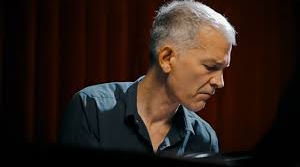
Pianist Brad Mehldau plays Your Mother Should Know by The Beatles. It is the title song from his album Brad Mehldau Plays The Beatles.

Sara Dowling sings Here I'll Stay. This video was recorded for saxophonist Sam Braysher's recent album That's Him featuring the music of Kurt Weill. An instrumental recording of the song was eventually included in the album and Sara's vocals included on other tracks.. You can hear the instrumental version here.

In 1962, Acker Bilk and his Paramount Jazz Band appeared in the film Band Of Thieves. Acker and his band are in prison. On their release they are persuaded by their promoter to burgle local stately homes while on tour. His girlfriend, a policewoman, finds out, and Acker and his band go back to prison, as does the promoter. There are a few clips on YouTube but here is the band playing Lonely. The cast (including the band members) is here.

Saxophonist Asaf Harris plays I Don't Know What's Inside (but It's got to be good ...) from his new album I Thought I Was Ready. [see article by Howard Lawes here]

Vocalist Rebecca Kilgore passed through the Departure Lounge in January. It is sad to only come across her voice after she has gone. This video is from 2008 with Rebecca singing Sugar; and here she is from her album with Hal Smith's Rhythmakers and How Long Has This Been Going On?

The Gareth Lockrane Big Band plays Captain Kirkland from their new album Box Of Tricks [See Recent Releases]

We are used to seeing Shaye Cohn playing as part of the Tuba Skinny band, but here she is in New Orleans in December with Craig Flory and David Boeddinghaus and Dreaming The Hours Away.
Two Ears, Three Eyes

Brian O'Connor LRPS from Images of Jazz took this pictures in January at East Grinstead Jazz Club in West Sussex when trombonist Geoff Mason was guest musician with the Club's house band (Adrian York, keyboard; Nigel Thomas, bass; Vince Dunn, drums). Brian commented on the "Beautiful playing of the classics from the 1950's and 1960's with melody and improvisation".
Born in North London, Geoff works as a freelance musician and has played with the 606 Club Big Band, the Ronnie Scott Big band, Paul Booth's “Bansangu Orchestra”, The Squadronaires and the Len Philips Big Band, amongst others. Geoff also leads his own Quintet/Quartet/Sextet - here is a video introduction to the music of the Quartet.
East Grinstead Jazz Club takes place on the first Tuesday of every month in The Apron Bar & Coffee House Chequer Mead Theatre (details here; Facebook here).
The Most Famous Piano
In The World?
by David Binns*

While researching for a future Hollywood documentary film on ‘The Most Famous Piano in the World’, I have come across two jazz albums that deserve a reprise. The albums are Space and Under The Jasmin Tree, by The Modern Jazz Quartet, both unusual departures from their elegant classical jazz style. The piano was the 100-year-old Bechstein C, resident in the world-famous Trident Studios in Soho, which opened in 1968. The ‘trippy’ space theme on the two tracks, Visitor From Mars and Visitor From Venus, both by John Lewis, was inspired by the Apollo 8 mission that made history with the first crewed mission to orbit the moon, leading to the first moon landing in July 1969.
In the same year the Beatles founded Apple Records and the MJQ were one of several artists signed to the new label. Apple were looking for experimental artists and head of A&R, Peter Asher, brother of Paul McCartney's girlfriend Jane Asher, persuaded the MJQ, who were touring Europe and the UK, to move from Atlantic Records. It was an unlikely match for Apples’ contemporary rock; the albums did not produce significant sales and the MJQ returned to Atlantic in 1971.
Owner of the studio Norman Sheffield wrote "The leader of the MJQ, John Lewis, had been so excited about working with our new 8 track equipment that he rewrote part of the space album for two pianos. He asked whether we could find a Steinway piano that was a close match to the Trident Bechstein. I personally helped John find it – and the results were magical".
The sessions were recorded by Norman’s brother and co-owner of the studio, Barry Sheffield, in March 1969, shortly after Trident opened. Peter Asher later explained that he wanted to experiment with a rock and roll engineer recording jazz. John Lewis’ modus operandi made a particular impression on him: "He totally ran the show. He was the band leader in the old sense of the word. If you recall, the MJQ's whole thing was to take jazz and present it as if it was classical music. They all wore suits and ties. They were all very buttoned up and controlled, that was their thing. It was like chamber jazz. That was all him.”

The Bechstein’s unique sound was said to come from its age-stiff hammers requiring players to strike the keys forcefully to produce a bright and crystal-clear sound. It remained in the studio until it closed and this was perhaps the only time that an artist asked for another piano. I would like to think that John Lewis used it on the Rodrigo Adagio from Concierto de Aranjuez where the piano has a softer and more lyrical sound.
The only other jazz album recorded at Trident in May 16th 1971 was In The Evening by Sandy Brown and the Brian Lemon Trio (here is the title track). Sandy was the architect and acoustic consultant for the studio and the album was recorded in a free session negotiated by Sandy as part of his fee. So why am I researching the studios? – because I was the architect assisting Sandy on Trident Studios and this job led to the formation of Sandy Brown Associates, architects and acoustic consultants. I am no longer with them, but nearly 60 years later the business is booming. Now called just 'Sandy Brown', they are the largest acoustic consultants in the UK and amongst the top ten in the world. The studio scarred me for life. In the dark one evening I fell down the newly dug lift pit and still bear the scar on my leg.
*David Binns was Sandy Brown's partner at the original Sandy Brown Associates company and is the editor of The McJazz Manuscripts, A Collection Of The Writings Of Sandy Brown; and Homes Of The Hits, a limited edition softcover book, about the twenty-one studios that the company were involved in setting up. Hopefully that book will be available on Amazon in the future.
There is also a YouTube video about the Bechstein piano here. The video is concerned primarily with rock bands that used the piano at Trident studios but it gives examples of the sound achieved with the piano. It also notes that when the studio closed, the piano was damaged and then sold and its location became unknown.

Anagram
Did You Know?
When Liverpool's Cavern Club Opened
The late pianist and bass player Ron Rubin Remembers

It was Wednesday, 16th January, 1957 when the Cavern Club opened at 10, Mathew Street, an alley of tall warehouses off North John Street, bang in the city centre of Liverpool. Proprietor Alan Sytner had, as a teenager, spent his holidays in Paris, visiting jazz clubs, amongst them the Caveau de la Huchette, an atmospheric jazz cellar on the Left Bank. Alan had introduced me to jazz at school and was determined to open a place in Liverpool similar to the Caveau (after which the Cavern was named) when he left school. At the time it seemed to me to be just a fantastic pipe-dream. Alan’s father, a docklands GP, had taken out some sort of insurance policy for Alan when he was a child. It matured when he was 21, giving him £4,000, which he used to open the club.
Four bands played on the opening night: the Merseysippi, the Wall City Jazz Band, Ralph (later ‘Bags’) Watmough’s Jazz Band, and the Coney Island Skiffle Group (which included Ron McKay and Roger Baskerfield). I played bass with Watmough and Coney Island.
The opening was a sensation. There was a queue half a mile long controlled by mounted police: 650 were admitted and over 1000 turned away, according the Liverpool Echo.
I played with various bands at the Cavern all year. Girls and chaps from nearby offices and shops would come along and spend their lunch hours at these sessions, jiving, eating their sarnies and socialising. There was always a happy atmosphere. I was working full-time at my father’s office around the corner, and he did occasionally complain about my two-and-a-half-hour lunch breaks. I tried to get off the hook by saying it was work – well, I was getting paid, wasn’t I?

Ron Rubin
Time Out Ten
Che Gelida Manina
(Your Tiny Hand Is Frozen)
Giacomo Puccini / Bob Rose

For this item you need to be able to stop for ten minutes.
We are often moving on to the next job, the next meeting, scrolling down social media, taking the next call ......'Time Out Ten' asks you to stop for ten minutes and listen to a particular piece of music; to find a time when you won't be interrupted, when you can put in/on your headphones and chill out. Ten minutes isn't long.
To consider Puccini's beautiful aria from La Bohème in terms of jazz might seem like heresy, but good music is good music.
In the opera, Rodolfo, a poet, lives in an attic with three friends; a painter, a philosopher and Schaunard, a musician. They have little money. One day Schaunard comes home with a payment for some work so Rodolfo's friends go to the pub. Rodolfo stays behind to finish some writing when there is a knock at the door. A neighbour, Mimi, (who we later discover has 'consumption' / tuberculosis) asks for a match to relight her candle. Rodolfo lights it, the candle goes out again and Mimi drops her key. The two search for it in the dark. Rodolfo touches Mimi's hand and the aria begins.
In this jazz video of the aria, Bob Rose plays piano alongside pictures of the sequence. The translation from Italian helps to understand the story and the variety of expression brought to the music:
Many years ago, not long after leaving school, I worked for a while in a prestigious menswear tailors and outfitters shop in London's Savile Row. I had a friend there, Austin, a tenor, who worked there to fund his music studies. The store's overcoat room was on the first floor and there Austin would practice at quiet times. He helped me to listen to Puccini: "Listen to the way Rodolfo sings the second "Cosi" when he is pouring some wine for Mimi" or, "In the aria, at the end, the notes he reaches when he sings "poiché, poiché v'ha preso stanza, la speranza. Or che mi conoscete parlate voi. Deh parlate. Chi siete? Vi piaccia dir?" (the translation: "my dreams of the past, were soon stolen away. But the theft doesn't upset me, since the empty place was filled with hope. Now that you know me, it's your turn to speak. Who are you? Will you tell me?")
The man who managed the packing department in the shop had a brother who worked at Covent Garden Opera House and he organised for Austin and I to go to La Bohème featuring Victoria de los Ángeles. On the night, Austin was unwell, but I went with my libretto and waited outside stage door afterwards to get Victoria's autograph, but her minders spirited her away. The next week I probably went to hear Sandy Brown's band at the Six Bells in Chelsea.
Austin recommended that I listen to Jussi Björling singing Rodolfo with Victoria de los Ángeles and Sir Thomas Beecham on record. The reproduction here is not quite as good as from the record itself, but it captures the expression and the timing in the Swedish tenor's interpretation:
Jazz Played Here
The Fat Kat Jazz Club
Mongolia
by Peter Maguire*

The Fat Cat Jazz Club in Ulaanbaatar, Mongolia, is an intimate, underground jazz club located in the basement of the Veranda Restaurant on Jamiyangun Street in the heart of Ulaanbaatar, and was founded by the Jazz Train trumpet player, Khongor Ganbat, and the singer-songwriter, Dulguun Bayasgalan.
The first conversation of opening a jazz club happened in April of 2018. "After a moment of scratching heads, knitting brows and chewing on the ends of pens Dulguun had an idea that, if successful, would make the Fat Cat the first jazz club in Mongolia to be crowd-funded. Instead of finding a large sum from one place, why not get small loans from a bunch of individuals? Believing there were enough like minded individuals in town that might just enable us to pull it off, we made a little presentation and started pitching it to some friends."
"People were immediately excited about the idea and the contributions started coming in. It was unbelievably exciting to see the crowd-funding idea actually work. In a matter of just 4 months, it went from having an idea to sitting in our very own jazz club. In the end we received contributions from a total of 43 people, and you can see their names hanging on the wall inside the club next to the stage".
The Fat Cat Jazz Club is in Jamiyangun Street, 5-1, Ulaanbaatar, Mongolia. Their website is here. Telephone: +976 7509 8787.
Mongolia, a nation bordered by China and Russia, is known for vast, rugged expanses and nomadic culture. Its capital, Ulaanbaatar, centers around Chinggis Khaan (Genghis Khan) Square, named for the notorious founder of the 13th- and 14th-century Mongol Empire. Jazz in Mongolia? Here is a brief history:
*Trombonist Peter Maguire is based in Belgium and is the creator of the Jazz Clubs Worldwide website, a valuable database if you are looking for jazz clubs elsewhere. Peter will be telling us of other clubs in future issues.
Asaf Harris
I Thought I Was Ready
by Howard Lawes*
Asaf Harris plays I Don't Know What's Inside (but its got to be good ...) from his new album I Thought I Was Ready.
Even though jazz is an international art form it is often very difficult for jazz artists to become well known beyond their local area, let alone in a different country. The sadly missed Martin Hummell made it a defining ambition of his record company, Ubuntu Music, to advance the careers of jazz musicians from around the world and two of these, both Israeli, were guitarist Ron Magril and saxophonist Asaf Harris. Speaking to Asaf via Zoom he recalled that it was Ron that introduced him to Martin, and both Ron, with Until Now (2022) and Asaf with Walk of the Ducks (2022), released their debut albums on the Ubuntu label.
Asaf grew up living in the picturesque town of Zichron Yaakov, founded in 1882 by Baron Edmond de Rothschild. Asaf’s mother is a teacher, his father Eytan, is a respected film cameraman and director who specialises in thought provoking documentaries often related to conflict in the Middle East. Asaf’s parents were great fans of the Beatles with a large collection of records that Asaf got to know well as a child. For many years the Beatles were banned by the government from playing in Israel, but this changed when Paul McCartney visited Israel in 2008 for his “Friendship First” concert aiming to foster peace and reconciliation between Israel and the Palestinians. Asaf and his father were at the concert, which turned out to be a life changing event for Asaf, because it was there that he decided to become a musician. During this concert the sound of the 40,000-crowd singing “Give Peace a Chance” must have been incredibly moving and unforgettable.
The music of Israel is very diverse reflecting its European, North African and Middle Eastern origins, but western popular music and jazz also has a large audience. Asaf studied music at high school and then at the Israel Conservatory of Music and was commissioned to compose scores for some of his father’s films such as Truth, Nothing But… (2014) and Sulha (2016), and it was these opportunities that persuaded him to become a composer as well as a musician. The Israel Conservatory of Music includes a Center for Jazz Studies and as an under-graduate Asaf benefitted from the partnership that had been established with The New School for Jazz and Contemporary Music in New York. An America-Israel Cultural Foundation scholarship helped Asaf to spend two years in New York and he was chosen by the school to represent them at the 2019 International Association of Jazz Schools convention in Zagreb, Croatia, under the guidance of master Dave Liebman. He was honoured with the School’s John Coltrane Award in 2020. In New York he studied saxophone under the legendary Billy Harper, as well as younger saxophonists Chris Cheek and Abraham Burton. He studied composition with Myron Walden and Jon Cowherd, both of whom were part of Brian Blade’s Fellowship Band and drawing on his family roots, arranged some traditional Ladino (a language of Sephardic Jews derived from Spanish and Hebrew) songs for the New School Orchestra led by Arturo O’Farrell.
The first two tracks on his first album Walk Of The Ducks, hark back to his time in New York during a period of unrest following the death of George Floyd in 2020. Another track, The Gate Keeper, is written about the protest in Israel in the summer of 2020 against the Israeli government and includes live recordings from the actual protests.
Here is the first track Helen Court 2020:
Asaf’s new album, I Thought I Was Ready (2026), is inspired by events over a longer period, highlighting that fundamental difference in both music and life, between rehearsal and live performance. In between these first two albums Asaf featured on Qamar al-Din (2024), the debut album of the band Komradin which was launched at the 25th International Oud Festival in Jerusalem. The music in this album, played with saxophone, oud and drums, uses traditional Arab structures called 'maqamat' and re-imagines traditional tunes from the classical Arabic vocal and poetry genre 'Muwashah', originating in Andalusia a millennium ago and which has seen a renaissance in recent times. Here is Asaf Harris and Komradin playing Dulab, a traditional piece in Maqam Hijaz.
I Thought I Was Ready features eight original tracks, each one telling a story, some capturing childhood memories, and places that are remembered with affection. The band has Asaf Harris on tenor saxophone, Guy Moskovich on piano, Omri Ever Hadani on double bass and David Sirkis on drums and is the same band that recorded music for the film scores more than ten years ago. The last track, FCB, also features the oud player, Onn Yosef Kadosh. For Asaf, like many composers, the music comes almost subconsciously, and in a period of turmoil, he has taken a step back and reflects on happier times. Following the title track, the next one, I Don’t Know What’s Inside (but it’s got to be good…) once again harks back to Asaf’s time in New York when a long queue outside the Blue Note Jazz Club prompted the remark from a passing 'down and out' guy.
*Saxophonist Howard Lawes is National Jazz advisor for U3A Jazz Groups and a freelance writer who contributes each month to Sandy Brown Jazz What's New magazine.
Where Am I?

Lover, one lovely day love came along to this place, planning to stay. The setting was just right for nights beyond forgetting. We are apart now but I could kiss the ground here when I recall the love I found in my heart. Yes, I know, the words are a bit trite, but the title of where I am was good enough for two novels, one by Elizabeth Goudge and one by Sebastian Faulks and also a 1947 movie by director Victor Saville starring Lana Turner, Donna Reed and Van Heflin. Where am I?
The answer is HERE
The Story Is Told
Skin Deep

Drummer Louie Bellson recalls how: "(Duke Ellington) was one of the few bandleaders who allowed me to bring in my own arrangements. They had to ask me three times because I thought, how am I going to bring in music alongside that written by Duke Ellington and Billy Strayhorn? Juan Tizol said to me, 'You bring it in, he wants to hear some of your stuff.' So after coaxing me three or four times, I brought in The Hawk Talks and Skin Deep and he recorded them right away."
"That recording of Skin Deep to me was nothing but a guy playing drums, but I guess I got lucky. I drove drummers crazy with that because they thought that was me clapping my hands. It was not me. Al Foster, the great jazz drummer, said to me, 'Lou, I drove myself crazy trying to figure out how you did that.' I told him it was really easy, nothing to it because that's the band doing the clapping and they did it so well it sounds like one guy. But I didn't tell most drummers, instead, I let them go ahead and break their necks trying to do this!"
"When we recorded that in 1951 you didn't have stereo, it was hi-fi and Duke had already recorded The Hawk Talks but he was a little bit wary about recording Skin Deep because he wanted the listener to pick up on all the fast drum beats I was creating on the snare drum and the tom-toms. He didn't want that muddled sound. Finally, we were on the West Coast and this man, Bert Porter, who had Ampex Hi-Fi, recorded one of our concerts and when Duke heard the playback he said, 'Okay, everybody back down to that venue, we're going to record Skin Deep."
From Bands, Booze and Broads by Sheila Tracy
Insight
A series in which musicians give us insight into the background of one of their recordings
Lost and Found
by Vance Thompson

Grammy-nominated trumpeter Vance Thompson is the founder and director of the Knoxville Jazz Orchestra in Tennessee. Since 2017 he has been battling the effects of a neurological disorder called Focal Dystonia, a movement disorder that causes involuntary, sustained muscle contractions and abnormal postures in a single part of the body, often triggered by specific activities like writing (writer's cramp) or playing music (musician's dystonia). it became increasingly obvious that no amount of practice or physical therapy would be able to overcome the impairments that were compromising his ability to play his trumpet.
Looking back just a short while ago, here is Vance with the Orchestra in 2020 soloing on trumpet for the standard I Should Care with guest Christian McBride (bass). Greg Tardy is the saxophone soloist:
Just when all seemed lost, Vance found a new path that led him back to making music, and the result is Lost And Found, his first album as a leader in over a decade. With the album, Vance makes his re-debut – not as a veteran trumpet player, but as a newly minted vibraphone player.
Two weeks after the day he borrowed a pair of mallets from a colleague at the University of Tennessee he was calling friends to join him for informal jam sessions. “It was kind of amazing, but it didn't take too long before I sounded like myself. It did take some adjustment – a wind instrument can do all kinds of things that you can't do with vibraphone, but the same is true in the opposite direction: you can do things on a vibraphone that you can't do on trumpet, like play multiple notes at the same time or play whole chords. The vibraphone makes a beautiful sound almost completely on its own and there are certain things that just feel natural to do once you start playing.” Here is a brief introduction to the album.
During the time he was struggling – even working with the Knoxville Jazz Orchestra became a painful reminder of what he’d lost – the one aspect of Vance’s career that eased the pain was his teaching. No longer able to play in lessons, he devised new techniques to interact with students, and continued to evolve conceptually. That development, at least as much as the change in instruments, is what led him to record Lost and Found.
“In a weird way, I felt like I had improved as a musician during the period where I wasn't playing. Throughout that time, I thought, ‘If I could just play the trumpet, I think I’d be better than I was when I stopped playing.’ I feel freer as an improviser on the vibes than I ever remember feeling as a trumpet player, and I wanted to document my evolution as a musician.”
The Jazz Quiz
Way Down Yonder

In the quiz this month we give you 15 jazz-related questions to exercise those little grey cells. How many can you answer?
The February Jazz Quiz is
Tracks Unwrapped
Exploring the stories behind the music
Charles Mingus
The Black Saint And The Sinner Lady

Charles Mingus' 1963 album The Black Saint And The Sinner Lady is widely regarded as one of the greatest jazz albums of all time. A friend was given a copy of the album last Christmas, started to listen to it, and quickly passed it on. Initially, it is not an easy listen but there are many art works - painting, literature, film, that benefit from explanation; that need returning to a few times.. Written reviews of the album talk about the musical structure and technical approach of the composition and that is only partly helpful. Mingus wrote the liner notes himself (here) - some of them are a damning view of music critics, some are an appreciation of members of the band and the effect of the arrangement. At the end, there is a reflection by Mingus' psychotherapist, Edmund Pollack, but more of that later.
Charles Mingus wrote his autobiography Beneath The Underdog during the 1960s. "Mingus's autobiography also serves as an insight into his psyche, as well as his attitudes about race and society. It includes accounts of abuse at the hands of his father from an early age, being bullied as a child, his removal from a white musician's union, and grappling with disapproval while married to white women and other examples of hardship and prejudice." (Wikipedia). Wikipedia also describes how "In addition to bouts of ill temper, Mingus was prone to clinical depression and tended to have brief periods of extreme creative activity intermixed with fairly long stretches of greatly decreased output .."
The Black Saint And The Sinner Lady is a ballet divided into four tracks and six movements. It was recorded on the 20th January, 1963 by an eleven-piece band. The whole album is available on YouTube, but let us start with the first track (each track has a subtitle) "Track A - Solo Dancer" "Stop! Look! and Listen, Sinner Jim Whitney!" (Apparently this was not the baseball player Jim Whitney but "a metaphorical figure representing inner conflict and the album's exploration of love, struggle, and Mingus's own psyche, not a specific person.) In Psychotherapist Edmund Pollock's review he says: "In the first track of Side I there is heard a solo voice expressed by the alto saxophone - a voice calling to others and saying "I am alone, please, please join me!" The deep mourning and tears of loneliness are echoed and re-echoed by the instruments in Mr. Mingus' attempt to express his feelings about separation from and among the discordant people of the world. The suffering is terrible to hear."
Psychotherapist Edmund Pollock was asked by Mingus to contribute to the album's liner notes. His contribution has served as a respected approach to understanding the music: "When Mr. Mingus first asked me to write a review of the music he composed for this record, I was astonished and told him so. I said I thought I was competent enough as a psychologist but that my interest in music was only average and without any technical background. Mr. Mingus laughed and said he didn't care, that if I heard his music I'd understand. This is the uniqueness of this man: he jolts with the unexpected and the new. He has something to say and he will use every resource to interpret his messages. After all, why not have a psychologist try to interpret the projections of a composer musician? Psychologists interpret behavior and/or ideas communicated by words and behavior - why not apply this skill to music? It's certainly a refreshing approach that Mr. Mingus suggests.
"As Nat Hentoff has stated, "Mingus is ingenuous," ever growing, looking for change and ways to communicate his life experiences, his awareness and feelings of himself and life. His early and late life sufferings as a person and as a black man were surely enough to cause sour bitterness, hate, distortions and withdrawal. Yet, Mr. Mingus never has given up. From every experience such as a conviction for assault or as an inmate of a Bellevue locked ward, Mr. Mingus has learned something and has stated it will not happen again to him. He is painfully aware of his feelings and he wants desperately to heal them. He also is cognizant of a power dominated and segregated society's impact upon the underdog, the underprivileged and the minority. Inarticulate in words, he is gifted in musical expression which he constantly uses to articulate what he perceives, knows and feels."
"To me this particular composition contains Mr. Mingus' personal and also a social message. He feels intensively. He tries to tell people he is in great pain and anguish because he loves. He cannot accept that he is alone, all by himself; he wants to love and be loved. His music is a call for acceptance, respect, love, understanding, fellowship, freedom - a plea to change the evil in man and to end hatred. The titles of this composition suggest the plight of the black man and a plea to the white man to be aware. He seems to state that the black man is not alone but all mankind must unite in revolution against any society that restricts freedom and human rights."
The composition is also written for dance. Here Amy Roby and Christina Eltvedt from the For Dance Company dance to Track B - Duet Solo Dancers (Hearts' Beat And Shades In Physical Embraces). Edmund Pollock writes: "In track B, the music starts with a tender theme. It is a duet dance song in which many emotions of relatedness are expressed - warmth, tenderness, passion. The music then changes into a mood of what I would call mounting restless agitation and anguish as if there is tremendous conflict between love and hate. This is climaxed by the piercing cries of the trombone and answering saxophones as if saying the "I" of personal identity must be achieved and accepted."
The third track on the album "Track C – Group Dancers" "(Soul Fusion) Freewoman and Oh, This Freedom's Slave Cries" is described by Edmund Pollock: "Track C begins with the happiest of themes. Here Mr. Mingus himself plays a classical piano reverie backed by a lyrical flute and cymbals. It is sweet and soft and has a lightness rarely seen in Mr. Mingus’ music. But once again the music shifts into a tonal despair and brooding anguish. The theme suggested by the title is the peace and happiness of the free person contrasted with the pain and tears of the black man. Mr. Mingus uses many forms of technique and instrumentation to reflect his meaning. He told me his use of the Spanish guitar was meant to mirror the period of the Spanish Inquisition and El Greco’s mood of oppressive poverty and death." It is interpreted by Troupe Elevee here, but the album sound is better here.
Jazz Remembered
Ray Foxley

"UK pianist "Professor" Ray Foxley was born in Birmingham on the 28th December 1928. He began his musical career at the age of 14, when he took his first straight music lessons. Pianoforte rudiments did not hold any great fascination for him however, and after about 18 months he abandoned with relief this preliminary excursion into the musical world. It was about 2 years later that, attracted by a boogie record, he went out and bought the sheet music of Cow-Cow Boogie, upon which much time and energy was expended. That was the beginning."
Writing in the 'third person' for the programme notes for a concert 'Jazz At The Birmingham Town Hall' on Saturday, June 14th, 1947, Ray continued: "Fortunately, his musical evolution was speedier than most, and he soon began to dig the righteous stuff. Graduating through the Fats Waller stage, and fortified by a few months' syncopation lessons, (to get that bass) he began to acquire a truer perspective of the real jazz, and an increasing desire to play it. ... His association with various small bands began a long way back, and right from the early days his relentlessly righteous outlook has proved a bone of contention between him and the more commercially-minded of his fellow musicians. But he stuck to his beliefs and almost achieved his ideal band in the Gutbucket Six, a group whose unfortunate disintegration on the brink of success was brought about by the call-up."
"He is an implicit believer in the Morton principles of melody, variety, and originality in order to achieve the best results. And, above all, what counts with him is sincerity. That is why the Armstrong, Oliver, Morton, Bessie, creed is to him the ultimate in jazz, and why he still holds a great admiration for Fats, for those are the musicians to whom true artistry is infinitely more important than technical virtuosity. His band repertoire of 150 or so pieces is composed almost entirely of New Orleans standards, while his solo repertoire consists mainly of Jelly Roll’s blues and stomps, Joplin rags, and a few of his own compositions, the latter showing that Jelly’s maxim of originality has not fallen on stony ground. His greatest achievement to date? When he played Shreveport Stomp in an otherwise strictly classical competition, and missed first place by only one mark."
Here is Ray playing Jelly Roll Morton's Frog-I-More Rag :
Writing about Ray in the Guardian newspaper, CBJ Holme recalled: "His boundaries were wider. His four Ms, he told me, were Jelly Roll Morton, Charles Mingus, Jerry Mulligan and Thelonious Monk. He founded the Gutbucket Six in 1946, playing local concerts while simultaneously running a trio, and appearing with the Gully Low Stompers. Radio dates followed with his Levee Ramblers, who he took to Paris in 1952, to great acclaim." Here are the Levee Ramblers with Deadman Blues from the BBC Jazz Club.
"He then worked in London with Colyer's Crane River Jazz Band, and the bands of Mick Mulligan, Chris Barber and Mike Daniels, returning to Colyer's Jazzmen, and his skiffle group, (later) in the 1950s."
Here are Ken Colyer's Jazzmen playing Chimes Blues in 1959. The piano is very much in the background until after Mac Duncan's trombone when Ray takes his solo around 5.12 minutes in:
"In 1960, Foxley moved to Bromsgrove, and was to be found gigging extensively in the midlands and the north country into the 1980s with the likes of Ken Ingram, Eddie Matthews's Jump Band, Rod Mason, Henry Gardiner's Southsiders and the Paragon Jazz Band. He was to play again with Colyer in 1986. For the last seven years, he played solo, and was in residency with the One More Time sextet of traditionalists led by trumpeter Max Emmons and clarinettist Tristan York. He was also admired by avant-gardists like sopranoist Lol Coxhill and percussionist Roger Turner."
The One More Time band had a weekly residency in the Brewery Tap pub in Brentford, and it was in London that Ray Foxley died on the 6th July 2002.
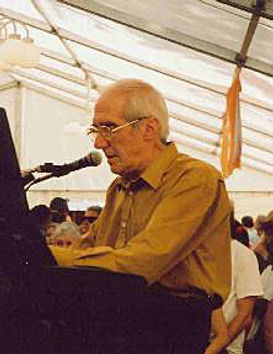
We would like to add more information to our page on Ray Foxley (here) and if any readers have memories of Ray, please let us know (Ed.]
Lens America
Jon Irabagon
New Look, New Albums

Journalist/guitarist Filipe Freitas and photographer Clara Pereira run JazzTrail in New York City. They feature album and concert coverage, press releases and press kits, album covers and biographies and they are valued contacts for Sandy Brown Jazz. You can read Filipe's reviews of album releases here and see Clara's gallery of pictures here.
Clara took this picture of saxophonist Jon Irabagon back in 2017 when his Quartet were closing the Angra Jazz Festival in Portugal. Filipe wrote of that occasion "Irabagon plunged into different jazz currents with the usual expansive posture and that incredible kicking sound that once was part of Chicago, and now often colors the New York jazz venues. They kicked in with “One Wish”, a melodious combination of soulful post-bop artistry and pop balladry that naturally evolved into swinging motion during the section reserved for improvisation...."
Fast forward to 2026 and Jon has grown a serious moustache. He also releases two new albums in March: Focus Out features Jon and his quartet – Matt Mitchell, Chris Lightcap and Dan Weiss – plus special guests KOKAYI, Donny McCaslin, Mark Shim, Miles Okazaki and Dave Ballou, while Saturday’s Child features Jon and New Orleans' Dan Oestreicher, both on the bass saxophone.
Here is a video of an extended version of the title track of Focus Out from 3 years ago that the Quartet has been working on for some time together:

Photograph by Stephanie Matthews
Forum
New Merlin's Cave
Hugh Evans writes: "I enjoyed hearing about the history of New Merlin's Cave. I spent many an enjoyable Sunday lunchtime there when I was a medical student in the '60s. I remember George Melly in particular. Such very fond memories."
[Our page about New Merlin's Cave in Clerkenwell is here. It is a page I need to update and so if any readers would like to add their memories, please let me know and I shall include them - Ed]
National Jazz Archive - Fund Raising Gig
Mark Kass, Executive Chair of the National Jazz Archive tells us that there will be two fundraing gigs for the Archive on the 7th March featuring vocalist Lily Dior and her band: "It’s a double whammy for the NJA as we're rather excited to welcome back the ever-charming - and incorrigible - Ms Lily Dior and her incredible new quintet to launch their forthcoming new album of originals. This will be swiftly followed by Lily’s usual musical ways of telling the fascinating story of another of the world's greatest women in jazz, Sarah Vaughan. The gig is on the 7th March at 1.30 pm at Loughton Baptist Church, High Road, Loughton, IG10 4QU. There are more details here.
The Archive is also looking for more volunteers to help with their work - if you would like to help, their contact details are on their website here.

Departure Lounge
Information has arrived about the following musicians or people connected to jazz who have passed through the 'Departure Lounge' since our last update.
When this page first started, links to newspaper obituaries were free. Then increasingly advertisements were added and now many newspapers ask for a subscription to read a full obituary. Where possible, we initially link to a Wikipedia page which is still free of charge, but we also give links to newspaper obituaries in case you want to read them.
Chris Watford

UK clarinettist and bandleader. Chris played with and led a number of UK bands including the Dolphin Jazzband; the Jazz Caverners; the Washboard Wizards; the Elite Syncopators and the Dallas Dandies. More information about Chris is here where he wrote a summary of his career for the Jazz Pilgrims site. Chris passed through the Departure Lounge on 6th December 2025. A video as a tribute to cornet player Ken Sims with Chris on clarinet from March, 2001, at Botany Bay Jazz Club, is here.
Ralph Towner

American multi-instrumentalist born in Washington in 1940. He began to improvise on the piano at the age of three. He began his career as a conservatory-trained classical pianist and studied classical guitar at the Vienna Academy of Music. He first played jazz in New York City in the late 1960s as a pianist. He was strongly influenced by Bill Evans and formed alliances with musicians who had worked with Evans - Eddie Gomez, Gary Peacock and Jack DeJohnette. In the 1970s he issued a number of influential records mixing folk music, Indian classical forms, and avant-garde jazz-influenced free improvisation. Ralph passed through the Departure Lounge on the 18th January 2026. Obituaries: Wikipedia : New York Times : ECM Records : A video of Ralph playing I Fall In Love Too Easily is here.
Rebecca Kilgore

American vocalist born in Massachusetts in 1949. Called "one of the best interpreters of the Great American Songbook she performed with pianist Dave Frishberg, trombomist Dan Barrett, saxophonist Harry Allen and others. Rebecca passed through the Departure Lounge on the 7th January 2026. Obituaries: Wikipedia : New York Times : Rebecca's website : A video of Rebecca singing What A Little Moonlight Can Do is here.
Recent Releases
A few words about recent releases / reviews:
Apart from where they are included in articles on this website, I don't have a 'Reviews' section for a number of reasons:
-
I receive so many requests to review recordings it is impossible to include them all.
-
Unlike some publications/blogs, Sandy Brown Jazz is not a funded website and it is not possible to pay reviewers.
-
Reviews tend to be personal opinions, something a reviewer likes might not suit you, or vice versa.
-
It is difficult to capture music in words, so much better to be able to listen and see whether the music interests you.
For these reasons in particular I just include a selection of recent recordings below where I share the notes issued by the musician(s) as an introduction and links to samples so you can 'taste' the music for yourselves. For those who like to read reviews, these, of course, can be checked out on other sites.
Some Recent Releases
UK
The Gareth Lockrane Big Band - Box Of Tricks
Gerald Clark - The Echo Chamber
Stephen Godsall - Tingling skins, buzzing wires
America
Europe and Elsewhere
Amir ElSaffar - New Quartet Live At Pierre Boulex Saal