

Sandy Brown Jazz
What's New
May 2026

The Art Of Miles Davis : This month when the centenary of Miles Davis birth is remembered by many, readers might like to look back on an article we featured in 2019 as part of our 'Jazz As Art' series. On that page you can play Miles' Some Day My Prince Will Come and look at a range of paintings we thought might go with the tune. 'The Art Of Miles Davis ' page is here.
2026 Parliamentary Jazz Awards
Nominations are now open for this Parliamentary Jazz Awards. You can nominate your favourite Instrumentalist of the Year; Vocalist of the Year; Album of the Year, etc. here where you will find details of the awards and nomination forms. The closing date for nominations is midnight on Friday 15th May. The Awards will take place at World Heart Beat on Tuesday 13th October 2026 at 7pm

Miles Davis and John Coltrane

2026 sees the centenary of the births of Miles Davis and John Coltrane, two of the major contributors to the story of Jazz. This month Robin Kidson writes about Me And Miles (here) with Robin looking back at his experiences of Miles Davis who was born in May. We also imagine how it might have been if Miles had dropped in for one of our Tea Break sessions (here). John Coltrane would have been 100 in September - it would be nice to bring together in September some of your peronal recollections of hearing John Coltrane - please contact us with yours.
A Good Read - JJA Book Awards
The American Jazz Journalists Association (JJA) present various awards, one of which is the Book Of The Year (2025) Award. The list of nominees for the award has been published and according to the information, the winners should have been announced 'early in April'. The results don't seem to be online at the time What's New goes online on 1st May, but readers might like to see the list of nominees and the various categories here where the results will, presumably, also eventually be found. They include biographies of Louis Armstrong, Cootie Williams and Gene Krupa; Ben Ratliff’s musings on music and running; Sascha Feinstein's conversations with critics; Maria Buscatto's 'Making Jazz in Contemporary Japan', etc.

Jazz In Marseille For 5000 Children

On International Jazz Day (30th April), Marseille in France staged a special initiative with their the “Ici Jazz Kids” programme to bring live performances into schools, cultural venues and even hospitals, with 19 events scheduled across the city. Musicians performed for pupils in classrooms and auditoriums, while venues such as the Théâtre de l’Astronef and HangArt hosted concerts and musical shows. 'The initiative aims to introduce younger audiences to jazz by turning Marseille into a large, accessible stage for the day, combining education with live performance'. Details are here.
Jazz In Baku Video
Euro News has featured a short video about Jazz in Baku, Azerbaijan. This city at the intersection of Europe and Asia has a history of jazz that 'blends Western improvisation with traditional mugham, creating a distinctive sound. Musicians highlight how collaboration, festivals and new talent are shaping the city’s evolving cultural identity. The video is here.

Jazz FM Awards 2026

This Years Jazz FM Awards took place on the 16th April. The winners of the various categories included: Omar, Emma-Jean Thakray, Samara Joy, Donovan Haffner, Mavis Staples, Joe Webb, Yazmin Lacey, Emma Rawicz, Fergus McCreadie, Ezra Collective, Verve Records, Chaka Khan, Balimaya Project with Discos Pacifico All-Stars and Van Morrison. Details are on the Jazz FM website here.
Video Juke Box

Click on the pictures to watch the videos..... or take pot luck and click on the picture of the Juke Box and see what comes up.

The Joe Lovano Quartet plays Lady Day from the forthcoming album Paramount Quartet on the ECM label. The album is due to be released on May 29th [Details next month]

NHOP (Niels Henning Ørsted Pedersen), the Danish bass player was a little younger than Miles Davis and John Coltrane, he was born in May 1946, but here is a chance to celebrate his 80th birth anniversary with this video of him with Oscar Peterson playing Reunion Blues. (NHOP passed away in April 2005).

The Cy Laurie Club in Soho in 1959. This BBC archive footage features the Sonny Morris band playing at the club. I'm sure you will make your own mind up about Francis Williams' commentary.

The cellist Shirley Smart has contributed much in recent years to introducing the cello to UK jazz audiences. Here she is playing Halfouine with her Trio - John Crawford (keyboards) and Demi Garcia Sabars (percussion) in Teignmouth in 2024

Here is the Spanish pianist Marco Mezquida's Trio playing the title track from their album, Táctil - 'a declaration of love for life, for the skin, for sound and for all human beings'. [See Recent Releases]

Danish vocalist Malene Mortensen and American pianist Christian Sands, introduce their fine new album, Malene & Christian. There are details and samples in this month's Recent Releases page.

Rewinding the years to 1947, Welsh bandleader Harry Parry and his Sextet play Honeysuckle Rose. Harry Parry plays clarinet but the rest of the band are not named.
The Story Is Told
Buddy Rich
'Traps' The Drum Wonder

Bernard Rich was born in Brooklyn, New York in September 1917. His parents, Bess and Robert, both worked in Vaudeville and even from the age of eighteen months Buddy appeared with his parents’ act dressed in a sailor suit behind a large bass and snare drum. By two years old he was playing the drums and his act included him coming out from behind the drums tap dancing. By four years old he was being featured as “Baby Traps the Drum Wonder”.
Unfortunately we do not have video footage from those days but audio recordings do exist (here) and another below:
By the time Buddy reached his teens he was leading his own band – at fifteen, he was the second highest paid child entertainer in the 1930s earning $1,000 a week (actor Jackie Coogan was the highest paid child entertainer). By his twenties, Buddy had fully embraced Jazz and was playing with bands such as those of Bunny Berigan, Artie Shaw, Tommy Dorsey, Count Basie and Harry James. The rest is history …..
The ‘Drum Wonder’ toured and performed until the end of his life in 1987 when he died of “unexpected respiratory and cardiac failure after a treatment related to a malignant brain tumour”. Buddy’s last televised appearance was on The Michael Parkinson Show in 1987 (here) and his last public appearance in 1987 was filmed here. It is hard to imagine how he was able to achieve those gigs. A drum wonder.
Me and Miles
by Robin Kidson
Miles Davis (26th May 1926 - 28th September 1991)
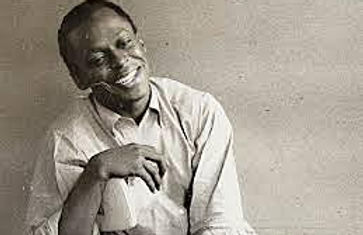
Had he lived, Miles Davis would have been one hundred years old this year. For more than fifty of those years, I have been collecting and listening to his albums. To my mind, he is one of the greatest ever jazz musicians and an icon of twentieth century music in whatever genre.
I first came across Miles Davis when I was an adolescent in the late 1960s. At the time, I was becoming interested in jazz not so much because of the music (which I hardly ever heard no matter how hard I searched) but because of its intriguing, slightly rebellious image. That image was reinforced when, for Christmas 1967, I was given a book called A Pictorial History of Jazz by Orrin Keepnews and Bill Grauer Jr. It was (and still is available in used copies) filled with the most marvellous photographs illustrating the development of jazz from Buddy Bolden to Ornette Coleman. It’s all there: romantically doomed Bix and his death certificate; Dizzy with existential beret and goatee; Stan Getz playing in some melancholically dark club; Duke, at his most elegant and urbane… and all in evocative black and white, the perfect palette for jazz.
But for me, the most compelling images in the book were of Miles Davis: handsome imperious Miles in dark glasses and gleaming white shirt, usually scowling and playing his horn as if it was the most natural thing in the world. He had an aura about him which I picked up not only from books but from the general culture of the time. His charisma extended well beyond the jazz audience. Miles was the ultimate modern man: sophisticated, hip and above all, cool.

I started seeking out the actual music of jazz rather than its pictures. There was plenty of Trad, of course, but at the time, I didn’t really think of this as “proper” jazz (I’ve changed my mind since, it should be noted…). But if you searched hard enough, “proper” non-trad jazz could be heard on the radio, particularly in obscure corners of BBC Radios 2 and 3. Yet I never seemed to hear any Miles Davis until, one Sunday evening in late 1968, I was listening to a Radio 2 jazz programme when they played an excerpt from Stuff, the opening track of the recently released Miles In The Sky album. Even to my jazz virgin ears, this sounded like nothing else I’d ever heard: jazz played to a rock beat. I was utterly captivated. I didn’t realise at the time but this was Miles dipping his toes into jazz rock or jazz fusion. He didn’t invent the genre but he was one of its earliest adopters and arguably its most imaginative practitioner.
I was home-taping at the time on a Philips 4-track reel-to-reel. I pressed 'record' and re-listened to the excerpt from Stuff over and over again until I knew it by heart. You can hear the whole track here:
Over time, I recorded more Miles Davis tracks I heard on the radio. I learnt that Miles had done much more before Stuff - and I loved all of it. I loved his technique, his tone, the different moods he created, and the way he kept moving, always exploring new ways of doing jazz.
In 1969, I became a student in London and began going to jazz concerts, hearing the music played live for the first time. Then, in the summer of 1970, I went to the Isle Of Wight Pop Festival with a group of friends. Miles Davis was on the bill and, as far as I was concerned, that was the main reason for going. The chance to see and hear my musical hero in the flesh was too good to miss. Also appearing at the Festival were some of the top rock stars of the era: The Who, The Doors, Jimi Hendrix… For jazz man Miles Davis to appear in such company might seem incongruous, but at the time, he was moving his music more towards the rock end of the jazz-rock spectrum. He had begun playing rock venues and attracting much larger and younger audiences. Doubtless there was the added advantage of greater monetary reward - and rock star adulation.
And so, on Saturday 29th August 1970, Miles Davis stepped on to the stage to play to his largest audience ever – estimates vary from 350,000 to upwards of 600,000, including me. I made my way to the front to get a better view. I got a good view alright but also a sonic onslaught, an undifferentiated roar which shocked my ears. This was partly down to the relatively primitive amplification technology of the time. It had to be loud to reach the far corners of the vast crowd. It’s interesting that the sound on the recordings – both audio and video – whilst still not ideal - is much clearer.
But there was another reason and this was down to the way Miles’s music had developed. Gone was the subtle, mainly acoustic jazz-rock of Stuff. Miles had embraced 'electric' in a big way, emulating the rock music to which he was increasingly drawn. Gone also was the less-is-more minimalism of his small group work in the fifties and early sixties. Now it was more-is-more. So, two pianos – or keyboards in the modern parlance – both electric and played by Keith Jarrett and Chick Corea. Also two sets of drums – or rather one drummer, Jack De Johnette, on traditional drums and Airto Moreiera, on “percussion”. The group was completed by Dave Holland on bass guitar (electric, naturally) and Gary Bartz on alto and soprano saxophones. Plus Miles, of course, on trumpet. The whole band looked like any other rock band of the era, and Miles looked every inch the modern rock star. He’d ditched that smart, understated but ultra-cool style of the fifties and sixties for an outfit of red leather jacket, studded jeans and fancy silver boots. You can watch the whole set here.
I left the Isle of Wight disappointed and disillusioned. I wanted the old Miles back: the jazz musician not the rock star.
Jazz Played Here
Jazz @ 248
Ottawa, Canada
by Peter Maguire*

“The Ottawa home for Bebop, Ballads, Swing, Bossa Nova, Brazilian popular music, Cool Jazz, Funk, Latin, and Jazz Standards. This is a place where the spirit of jazz lives and breathes, where music, creativity, and community collide. Whether you’re an amateur or a seasoned player looking to join an open jam session, or a fan of live music eager to soak in the sounds of music, this will be your hang out place. Come for the music, stay for the vibe. Our features highlight our regular jammers and house musicians; featured musicians or bands will get to play for the first 2 songs of every set for the night, followed by jams thereafter for the remaining of the set. There are about 3 sets each night.”
Jazz@248. Is at 248 Bank St unit 2, Ottawa, ON K2P 1X4 Their website and further details are here.
Here is a video from October last year to give you a taste of the club:
*Trombonist Peter Maguire is based in Belgium and is the creator of the Jazz Clubs Worldwide website, a valuable database if you are looking for jazz clubs elsewhere. Peter will be telling us of other clubs in future issues.
Did You Know?
Why "Lucky" Millinder
was called "Lucky"
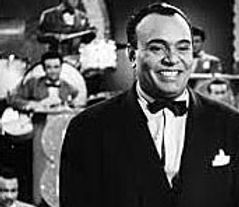
Bandleader "Lucky" Millinder was born Lucius Venables in Alabama on the 8th August, 1900. His surname changed when he was a child and he was raised in Chicago. Of course, "Lucky" might have just been a shortened form of Lucius, but there are other suggestions as to why he was "lucky".
One story has it that in the 1920s, while playing in a Chicago dice game, a member of gangster Al Capone's mob rubbed a pair of dice on Lucius' back (for "luck") before he made his shot, and wound up winning $2000. He gave Millinder a large tip and said, "You're a lucky guy". The nickname "Lucky" stuck with him for the rest of his life.
Another more general story is that Lucius was lucky professionally. He was a popular bandleader, but he couldn't read music, couldn't play an instrument, but he did sing a bit - see the video below. The bands' arrangements were largely made by pianist Bill Doggett. However, Lucius had charisma, but more than that, in the 1930s he led bands that featured some top jazz musicians. He led the Mills Blue Rhythm Band at the Cotton Club which included - Red Allen, Charlie Shavers; Sweets Edison and J.C. Higginbotham. In another band Dizzy Gillespie was trumpeter for a while and Lucius is credited with discovering Sister Rosetta Tharpe (video here) ... here is the band with There'll Be Some Changes Made.
Later in the1940s his bands moved more towards Rhythm & Blues with some hit recordings, but in the 1950s Lucky retired, took on music publishing and worked in public relations for a whisky distillery company. He died of a liver ailment in New York City in September 1966.
A 'Soundie' from the 1946 has been preserved and we are able to watch it here:
Anagram
Time Out Ten
That's What Friends Are For
Trijntje Oosterhuis

For this item you need to be able to stop for ten minutes.
We are often moving on to the next job, the next meeting, scrolling down social media, taking the next call ......'Time Out Ten' asks you to stop for ten minutes and listen to a particular piece of music; to find a time when you won't be interrupted, when you can put in/on your headphones and chill out. Ten minutes isn't long.
Hal David is probably the best known lyricist who collaborated with the late Burt Bacharach, but the words for That's What Friends Are For were written by the singer-songwriter Carol Bayer Sager. Carol tells the story of how she wrote the first line for the song "I never thought I'd feel this way ...", but Burt Bacharach pointed out that he had written another note at the beginning. Carol struggled to find words to fit and then Burt said "Just add 'And'!" So the song is always sung "And I never thought I'd feel this way ...".
It has been recorded multiple times and you will find plenty of examples on YouTube; it is a natural choice for groups (Dionne Warwick, Elton John, Gladys Knight and Stevie Wonder sang a version together here), but for our ten minutes time out, here is Dutch vocalist Trijntje Oosterhuis (pronounced TREIN-chuh OH-stur-heys where "Trijn" sounds like "train," "tje" is a soft "chuh,").
Trijntje had liaised with Burt Bacharach when she recorded an album of his songs The Look Of Love in 2006. The album includes That's What Friends Are For, but this video is from the North Sea Jazz Festival in 2021. Trijntje sang most of her set with the Metropole Orchestra but for this song it was just her and guitarist Peter Tiehuis:
Callum Au
Sing Seven Seas
by Howard Lawes*

The trombonist, composer, orchestrator and arranger Calum Au has embarked on his biggest project yet with the imminent release of his double album – Sing Seven Seas. Here is a taster with a video of Swipe Right, a reference to modern day social media, but the music is very much from the Swing Era of the 1930s and 1940s, the point being that this was the music that teenagers loved at the time. It is a foot tapper par excellence with an arrangement that very much typifies the era. It features Sam Watts on piano and Duncan Hemstock on clarinet.
Via Zoom, Callum talked to me about his twenty year, frankly breathtaking musical journey.
Although it is hard to believe, Callum claims that learning to play the trombone was entirely serendipitous, he just happened to be the tallest child in his class when the music teacher was handing out musical instruments. Making a sound with a trombone is not difficult but to be able to play a tune accurately requires precise movement of the slide and an understanding of how to vary your embouchure. However, 9-year-old Callum just took to it. Callum’s family were living in Blackpool at the time, home of the Tower and other ballrooms, all of which needed big bands playing music to dance to. Callum was very fortunate to receive music lessons from trumpeter Terry Reaney, a member of the Syd Lawrence Orchestra for 15 years and someone who is reputed to have played in every ballroom in Blackpool. Here is Terry Reaney in the trumpet section playing Trumpet Blues & Cantabile .
Callum progressed rapidly and having passed his grade V ABRSM exam, Terry started introducing the teenage Callum to professional, big band rehearsals where he heard the music of Duke Ellington, Count Basie and Glenn Miller etc. Playing this music alongside and learning from experienced members of well-known dance bands was an invaluable experience for a young musician. Terry also recommended listening to the great trombonists of the day such as Don Lusher, Urbie Green, George Chisolm and Mark Nightingale and in fact it was Mark Nightingale’s 1997 album, Destiny with its mix of standards and original material which has been a lasting inspiration. Co-incidentally Callum followed Mark’s example and joined the National Youth Jazz Orchestra (NYJO) at age 15, part time initially but full time from age 17.
Bill Ashton, the founder of NYJO, provided Callum with further inspiration, this time with composition. Callum describes how Bill Ashton would encourage young musicians to write pieces of music with amusing titles and then have them played by the orchestra. Callum clearly enjoyed this process as the NYJO library holds 120 of Callum’s compositions. Despite immersing himself in music to the extent that he was playing with local bands around Blackpool almost every night of the week, Callum decided not to enter a conservatoire but went to Balliol College in Oxford to study Classics, this time following in the footsteps of Boris Johnson. Although not studying music at university, Callum continued to play with NYJO, joined the Oxford University Jazz Orchestra and the Oxford University Big Band and further honed his technique with lessons from Mark Nightingale.
After graduation in 2011 Callum moved to London and began work on material for his Callum Au Big Band that resulted in a debut album called Something’s Coming (2013) inspired in part by the sublime music of Leonard Bernstein. In 2012 Callum had become a member of the Ronnie Scott’s Jazz Orchestra which in turn introduced him to the amazing body of musical talent that resides in London. Callum admits that at this stage in his career he was still looking to improve as a composer but felt the need to release an album that would provide material for his big band to perform on tour. He also learned a great deal about the process of producing and recording music and he pays tribute to the Grammy award winning sound engineer, Steve Price, for his work on the album. Apart from arrangements for NYJO’s 50th anniversary album, and continuing to perform in other bands, another project that premiered at Ronnie Scott’s in 2015 featured both classic and modern arrangements of some of Gershwin’s best-loved songs. The show’s centrepiece was Callum’s new arrangement of Rhapsody in Blue with the virtuoso pianist James Pearson. The event was live-streamed at the time and the video is still available on YouTube (1hr 53 min - as it was live-streamed the video takes a little while to begin):
In 2016 Callum arranged a selection of legendary songs from the great American songbook for a project called Hollywood Romance featuring Claire Martin on vocals, the James Pearson Quintet and the Tippett String Quartet. The Hollywod Romance project laid the groundwork for the next project, which was the album Songs and Stories (2020) featuring Claire Martin on vocals plus 81 musicians combining big band and orchestra. This album was widely acclaimed and won the 2021 Parliamentary Jazz Award for Best Album. With so many musicians involved playing Callum’s arrangements, Songs and Stories had really raised the bar and proved the concept that a project on this scale could be successful. Here is an introduction to Songs and Stories:
Typically, Callum never stops learning and he describes how, in 2022, he was priviledged to experience the legendary composer, conductor, arranger, and orchestrator Dave Metzger working on the music for a Disney film. Callum feels strongly that learning your craft on the job alongside experts in the field is just as productive as following an academic route, and who would disagree given that Callum has worked so successfully with international stars, symphony orchestras, big bands, radio and BBC Promenade Concerts. Callum’s association with Claire Martin continues with a project called The Art of Swing, described as "world-class orchestras and breathtaking new arrangements that create an unforgettable event celebrating the Great American Songbook and beyond."
Sing Seven Seas marks another milestone in Callum’s remarkable career with a double album of original music written not just for an ensemble of over 80 musicians, but for the individual members of both big band and orchestral sections of the ensemble. Volume 1 is original music inspired by a wide variety of ideas from the classical Greek to contemporary internet platforms while Volume 2 includes tracks that pay homage to four of the big band leaders that inspired Callum in Blackpool and continue to inspire him today.
*Saxophonist Howard Lawes is National Jazz advisor for U3A Jazz Groups and a freelance writer who contributes each month to Sandy Brown Jazz What's New magazine.
Rehearsal
A series in which we catch on video musicians or a band in rehearsal.
The Alvin Batiste Jazz Institute

Clarinettist Alvin Batiste passed away in 2007, but by then he had set up his own Jazz Institute at Southern University in Baton Rouge, Louisiana. at the Institute.
In this video, he and others talk about the approach they take with students at the Institute. We have an insight into Alvin's style of rehearsing; the importance of introducing students to the music 'business' and how "hanging is as important as gigs".
Where Am I?

It's easy to guess, my baby said yes. I know I've just thrown a great big seven, for she is the prize - what lips and what eyes! She knows that I've got all the stuff, got all the things; she thinks that I'm angel enough without the wings; and that's why I'm ........................... having a 'heck' of a time.
The answer is HERE
Tea Break

A series where musicians and others stop by for an imaginary Tea Break to talk about their music and projects. We usually talk with current musicians about their projects but on this occasion we wondered how a Tea Break might have gone with Miles Davis? The answers he gives to the questions here are all built around some of his actual quotations.
Miles Davis

It must have been a busy morning at the Café Le Rêve as Natalie was still clearing tables. She looked up and smiled as I came in. Arthur was in his usual seat by the window, his scruffy dog, Alfie, asleep under the table. Arthur must have been here for a while as he was now half way through the crossword in his newspaper.
“Morning, Arthur”. Alfie opened one eye.
“Morning”.
Miles Davis’ Kind Of Blue album was playing quietly in the background, and the ‘reserved’ card for me had been placed in one of the booths at the back of the café. Ferdinand, the owner, appeared from the kitchen where he had been helping Joe, the chef. He waved, grabbed something from behind the counter and disappeared again.
Natalie asked who was coming today and did I have the CD?
"It's your favourite American trumpet player, Miles Davis, Natalie. Here's his Relaxin' album, he should be here soon so I’ll wait to order, thank you”.
A few minutes later, Miles arrived, - dark glasses. his hat pulled down. Under the table Alfie opened an eye and wagged his tail. Natalie immediately knew who he was, welcomed him, and brought him over to the booth.
Hi Miles, great to see you. You found the cafe then. How are things?
Yeah, cool, thankyou. It's like my future starts when I wake up every morning. Every day I find something creative to do with my life. It's not about standing still and becoming safe. If anybody wants to keep creating they have to be about change.
That's a good thought to start the day.
Sure. It's not about standing still and becoming safe. If anybody wants to keep creating they have to be about change.
Can I get you a coffee, Miles? I read a piece from a coffee roasting company that says: "If Miles Davis roasted coffee, his style would evolve over time, developing new techniques to bring out the best flavor while never losing sight of fundamentals. If Miles Davis roasted coffee, he would be willing to change with the times while always staying true to his own voice. If Miles Davis roasted coffee, we think it would taste a lot like Three Keys."
That's cool! A lot of people ask me where music is going today. I think it's going in short phrases. If you listen, anybody with an ear can hear that. Music is always changing. It changes because of the times and the technology that's available, the material that things are made of, like plastic cars instead of steel. So when you hear an accident today it sounds different, not all the metal colliding like it was in the forties and fifties. Musicians pick up sounds and incorporate that into their playing, so the music that they make will be different.
True. I remember this place I used to work where someone had put up a card on the door saying "Change Is Here To Stay'. How about a pastry with the coffee, Miles?
I'm a fiend when it comes to good pastry, and the French make the best as far as I'm concerned!
I'll ask Natalie to bring some over. Natalie came over here from France a couple of years ago so she'll like that. She loves your music too, as you can probably tell! I've asked her to play something from the Relaxin' album - and she has chosen If I Were A Bell.
I realise it is a long way back, but as it is your centenary, can you remember anything from your early days?
The very first thing I remember in my early childhood is a flame, a blue flame jumping off a gas stove somebody lit - I remember being shocked by the whoosh of the blue flame jumping off the burner, the suddenness of it - I saw that flame and felt that hotness of it close to my face. I felt fear, real fear, for the first time in my life. But I remember it also like some kind of adventure, some kind of weird joy, too. I guess that experience took me someplace in my head I hadn't been before... The fear I had was almost like an invitation, a challenge to go forward into something I knew nothing about. That's where I think my personal philosophy of life and my commitment to everything I believe in started ... In my mind I have always believed and thought since then that my motion had to be forward, away from the heat of that flame.
And now, so many years later, here you are - a legend!
I know what I’ve done for music, but don’t call me “a legend”. A legend is an old man with a cane known for what he used to do. I’m still doing it.
Sorry .... change the subject! When you play, you always seem to get really involved in your playing?
If I got my mind on something about my band or something else, well, hell, no, I don’t want to talk. When I’m working I’m concentrating. I bet you if I was a doctor sewing on some son of a bitch’s heart, they wouldn’t want me to talk. I always listen to what I can leave out.
Ah, here's Ferdinand. It's his café. How about another coffee? What's your favourite Miles album, Ferdinand?
Well, talking about coffee, I have to say Bitches Brew! Man! That was quite an important album for you in 1970, Miles, with the introduction of fusion and electricity!
Hi Ferdinand, Yeah, I had seen the way to the future and I was going for it like I had always done. I had to change course to continue to love what I was playing.
It split the jazz world at the time!
So what! Good music is good no matter what kind of music it is. Yeah, another coffee would be good.
Well, here's what some of the guys in that band say:
I know you have to go, you've got a session with Gabriel, I think. How's it going?
Man, that cat can play the horn, but he has no idea what to do to make my music ... been playing with those angels and all that shit too much, I guess. I tell him "Don't play what's there, play what's not there." 'What if I make mistakes?' I say: '"Don't fear mistakes, there are none. It’s not the note you play that’s the wrong note – it’s the note you play afterwards that makes it right or wrong." He doesn't get it. I say “Anybody can play. The note is only 20 percent. The attitude of the motherfucker who plays it is 80 percent.”
These things take time, I guess, but you've got plenty. You'll get there. Thanks for dropping by and chatting, Miles. People say you don't talk much but this has been a real pleasure. We must get together again in another hundred years.
Yeah, thanks, talked too much today! Some day I'm gonna call me up on the phone, so when I answer, I can tell myself to shut up!
No, don't do that. Tell them that it's Human Nature! Anyway, we know what to say to those people .....
And so Miles picked up his hat and left. He stopped when Natalie opened the door for him; he took off his glasses, held her hand, smiled, and said "Thank you". She couldn't concentrate for the rest of the day and Ferdinand let her go home early.
Two Ears, Three Eyes

Brian O'Connor LRPS from Images of Jazz took this picture of award-winning UK saxophonist Andy Sheppard at The Watermill Jazz Club in Dorking on the 7th April. Andy's trio on this occasion were Rita Mercotulli (piano) and Michel Benita (bass). Brian says of the gig that it was: "An intriguing gig of original compositions, except for one by Carla Bley. This was the first of only 3 gigs in the UK on this tour."
Born in the UK and then moving to France and Portugal, Andy Sheppard is one of Europe's leading jazz figures. Since the 1970s he has played and recorded with many renowned musicians. "The music for this trio was written and incubated during the early months of 2021, a period which allowed Sheppard the opportunity to dedicate his time almost exclusively to compositional work. The music was commissioned by Costa Oeste Productions as part of the project Hothouse-Creative Incubator, which was co-financed by the programme Garantir Cultura, Compete 2020, Portugal 2020 and the European Union, through the European Regional Development Fund".
Here is a video of Andy talking about his music and with the Trio:
The Jazz Quiz
Musicians' Compositions

For our quiz this month we give you the titles of fifteen jazz tunes each composed by a jazz musician. Can you name the composers?
The May Jazz Quiz is
Insight
Dave Holland
Vital Spark
The Story Behind The Album Artwork

In February, 2026, jazz legends Dave Holland and Norma Winstone, together with the versatile London Vocal Project, released Vital Spark on the Edition label - an album featuring a collection of Kenny Wheeler’s final compositions that were sent over time to Pete Churchill. The album captures a rare unity between jazz ensemble and choir, revealing a sound that’s both unforced, delicate, reflective and full of Kenny’s character and energy. The music features new lyrics by Norma Winstone, alongside Wheeler’s settings of poems by Stevie Smith, Lewis Carroll, and William Blake. "The result is unmistakably Kenny Wheeler: lyrical but unsentimental, harmonically rich yet spacious. For Dave, Norma, and Pete, this project is not a retrospective but a personal, shared act of remembering and reinterpreting, shaped by decades of friendship, collaboration, and quiet reverence for one of the most singular voices in modern music."
Oli Bentley, who creates the artwork for Edition Records, writes about his thoughts behind the design for this album:
“The artwork for Vital Spark is all hand-printed using the Brico system of shapes that we’ve used for all the releases by Dave Holland on Edition. This means it was built entirely on the printing press, with no digital or computer work - and that feels like a really nice way to represent this music. We get something much more human - something warmer, and imperfect in lovely ways. This music is so human, and in a world of AI and technology, I think that’s so incredibly important to reflect and embody. Speaking with Dave, Pete and Norma, it’s clear that this project has so much humanity within it. In the design itself, there were some initial ideas we started with - the obvious connection to the title being the starting point, and trying to create something really bold and iconic from that.”
Listen to the title track:
“I’m not religious, but I do like the idea that we’re all made of cosmic dust, and the thought of Kenny as a star somewhere, looking down on the completion of this project, felt right. The idea of a spark - but not a glossy, shiny, polished one - something human, modest and warm; something that felt kind somehow, and that held a quiet joy within it, as well as depth and complexity. There was also something for me in the idea of a visual built from many layers, reflecting the way the music was made, as well as how it sounds. This is a collection of music built with so much love, care and dedication — built up over time — as well as music build of many layers - and so this patchwork forming as the layers come together, each adding more depth as it builds upon the last felt really appropriate.”
“Early in the process, Pete shared with me these amazing scans of things Kenny had sent through the post as he shared the music - not only scores with wonderful handwritten notes, but also the poems the lyrics were based on, ripped straight from the books. I knew we had to include them in the artwork, and so they appear on the inside of the gatefold. It was such a gift to be able to work with these - and to share just a few of them with everyone - offering a connection to the writing process, and to Kenny himself.”
Listen to their interpretation of Lewis Carroll's Will You Walk A Little Faster from Alice's Adventures In Wonderland:
“Pete, Dave, Norma and everyone involved in this project have treated it with such care and respect, dedicating so much time and energy to it. I just hope we’ve come close to doing justice in the visuals to the incredible music that is the outcome of all that incredible energy.”
Vital Spark was released on the Edition label on 20th February, 2026, featuring Norma Winstone (voice); Dave Holland (bass); Nikki Iles (piano); James Maddren (drums); Mark Lockheart (tenor & soprano sax); John Parricelli - guitar (on 5 tracks) and The London Vocal Project - Director: Pete Churchill (personnel here). At the time of writing, CD copies were sold out on Bandcamp but digital and vinyl copies were available - track samples and details are here. CD copies are available from Amazon (here) and other outlets.

Graphic designer Oli Bentley picture courtesy of Sara Teresa
Take Two
Where we take two different approaches to a jazz number
Basin Street Blues

Basin Street Up The Line
Now won't you come along with me
To the Mississippi?
We'll take a trip to the land of dreams
Blowing down the river, down to New Orleans
The band is there to meet us
Old friends to greet us
That's where the line and the dark folks meet
A heaven on earth, they call it Basin Street
Basin Street in New Orleans, Louisiana, was the heart of the Storyville red-light district. Running parallel to Rampart Street, it was famously immortalized by Spencer Williams, who wrote the Basin Street Blues. in 1928. Louis Armstrong recorded the song that same year. "Up the Line" describes the entirety of the Storyville district - the "line" of saloons, brothels, and cafes where early jazz musicians found regular work and "where the folks all meet". There was a rail terminal and freight office in New Orleans for the Southern Railway and New Orleans Terminal Company, and "the Line" could also refer to the railroad.
Our first take features Jack Teagarden and Louis Armstrong in the 1951 film The Strip:
Our second take comes from the Keith Jarrett Trio - Keith Jarrett (piano); Gary Peacock (double-bass) and Jack DeJohnette (drums). They were in Tokyo in July 1993 and this was one of their numbers from a concert at Open Theater East:
I said, Basin Street, Basin Street
Where the elite always meet
Down in New Orleans, the land of dreams
You'll never know how nice it seems
Or just how much it really means
Just to be, yes, siree, in New Orleans
The land of dreams where I can lose
My Basin Street blues

Basin Street Down The Line
Forum
Marion Williams
For some years we have updated a page about Marion Williams with readers' memories of the singer. Jazzwise magazine has recently carried an article by writer and photographer Val Wilmer with her memories of Marion / Marian and these add more information to Marion's story. You can read Val's article here and we have added the link to our updated page about Marion here.

Breaks and Solos
Last month we asked readers for their views on the difference between 'breaks' and 'solos'. Ron Drakeford summed it up saying: "As far as most tunes in the traditional jazz repertoire that have breaks are concerned, they are more often than not ones of 2 bars where the band stops apart from the person taking the break. Typical example is Dippermouth Blues which ended up as a vocal break. Solos usually still have the rest of the band, or at least the rhythm section playing apart from drum solos when everyone apart from the drummer stops." There is a general consensus on this, although some people suggest that 'breaks' are for four bars.
Departure Lounge
Information has arrived about the following musicians or people connected to jazz who have passed through the 'Departure Lounge' since our last update.
When this page first started, links to newspaper obituaries were free. Then increasingly advertisements were added and now many newspapers ask for a subscription to read a full obituary. Where possible, we initially link to a Wikipedia page which is still free of charge, but we also give links to newspaper obituaries in case you want to read them.
Mike Westbrook

UK pianist, composer and bandleader born in Buckinghamshire in 1938. He formed his first jazz band, an octet, at Plymouth in 1958, and in the early 1960s., the Mike Westbrook Concert Band. He became a key figure in the development of British Jazz, featuring many significant jazz musicians. Mike Westbrook was 80 years old in 2016, and as part of the celebrations he recorded his first solo piano album for 40 years, entitled PARIS. It was recorded live over two nights at Hélène Aziza's art gallery in Paris. Mike passed through the Departure Lounge on the 11th April 2026. Obituaries: Wikipedia : The Guardian : The Times : Video introduction previewing Mike's Orchestra in 2023 (here)
Recent Releases
A few words about recent releases / reviews:
Apart from where they are included in articles on this website, I don't have a 'Reviews' section for a number of reasons:
-
I receive so many requests to review recordings it is impossible to include them all.
-
Unlike some publications/blogs, Sandy Brown Jazz is not a funded website and it is not possible to pay reviewers.
-
Reviews tend to be personal opinions, something a reviewer likes might not suit you, or vice versa.
-
It is difficult to capture music in words, so much better to be able to listen and see whether the music interests you.
For these reasons in particular I just include a selection of recent recordings below where I share the notes issued by the musician(s) as an introduction and links to samples so you can 'taste' the music for yourselves. For those who like to read reviews, these, of course, can be checked out on other sites.
Some Recent Releases
You will find our Recent Releases page HERE where you can scroll down and see our featured rele ases. Included this month are:
UK
Steve White Trio - Soul Drums : The Jazz Sessions Vol. 1
Olivia Murphy Jazz Orchestra - Fateful Birds & Fledgling Stories
America
Europe and Elsewhere
Markos Chaidemenos - Light Beam
Malen Martensen & Christian Sands - Malene & Christian